V Industry
Automotive & Aerospace.
Components measured in tolerances, moved on deadlines.
- Aerospace AOG parts
- Automotive components
- High-value secure handling
- Customs-controlled entries
The freight
High-value freight on a hard clock.
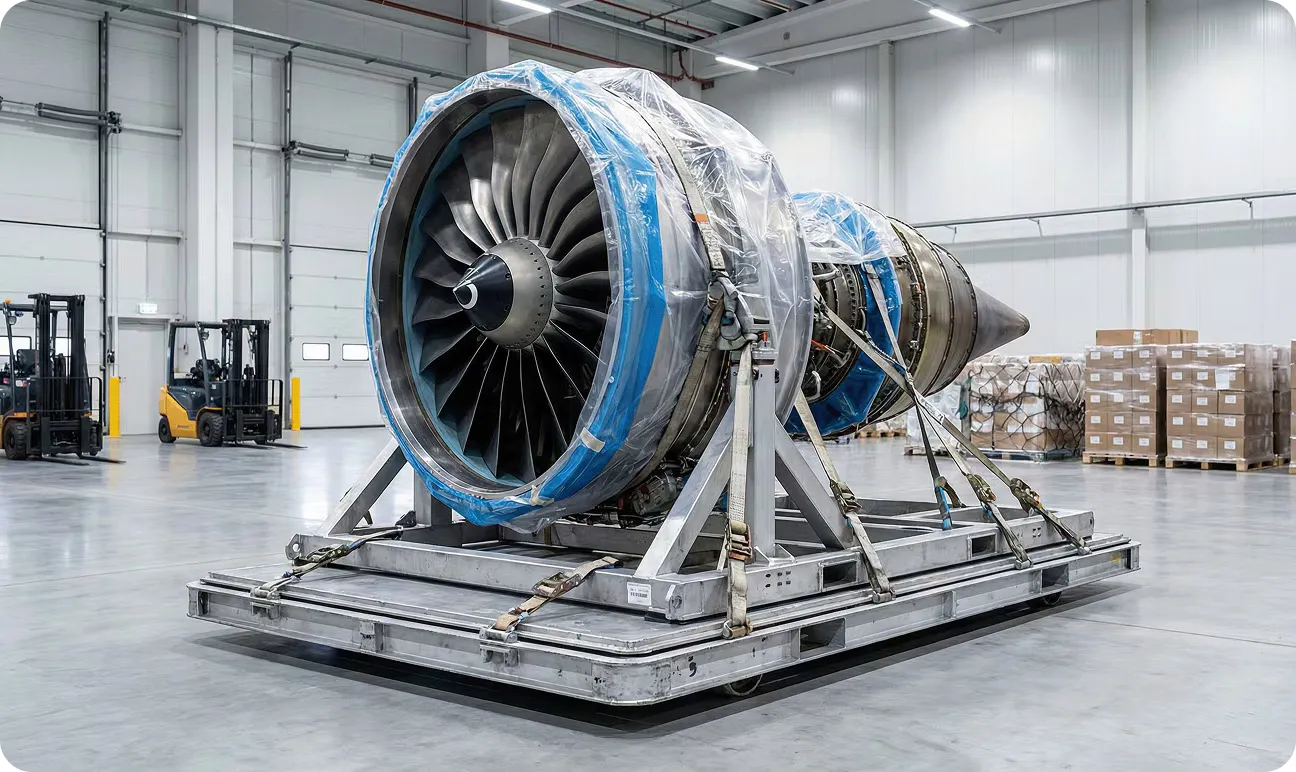
Automotive and aerospace freight is precision freight. The components are manufactured to tolerances measured in thousandths, they are expensive, and they are frequently the single part standing between an asset and the work it is supposed to be doing. A warehouse that handles this cargo is handling value and urgency at the same time.
Aerospace freight has its own term for the worst case: AOG — aircraft on ground. An airframe that cannot fly for want of a part is losing money by the hour, and an AOG shipment is the most time-critical freight in commercial logistics. The part may be small; the cost of it being late is not. The entire handling chain exists to make sure the part beats the clock.
Automotive freight runs a steadier rhythm but the same disciplines. Components feeding an assembly line, service parts feeding a dealer network, high-value modules and electronics — all of it demanding accurate documentation, secure handling, and a customs process that does not become the reason the line stops.
The work
What we do with precision freight.
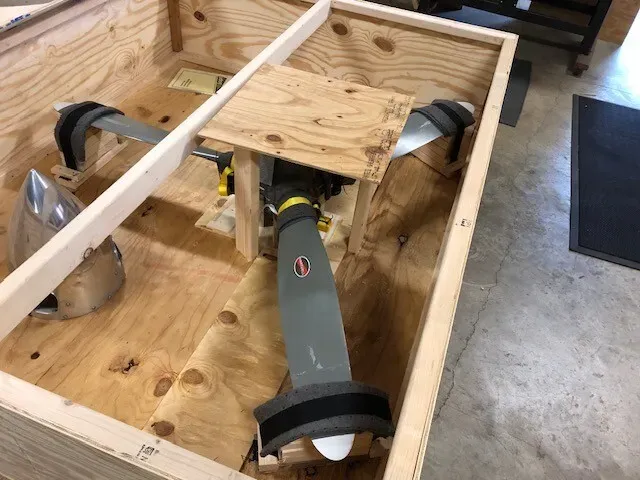
- AOG & time-critical handling. Expedited receiving, handling, and dispatch for aircraft-on-ground and other time-critical components — the freight moved on the fastest defensible lane, with the handoffs built so the part is never the thing waiting.
- Automotive component storage. Warehouse space for components, service parts, and modules — WMS-tracked, sequenced where an assembly or dealer network needs it, and racked to the part profile.
- High-value secure handling. Storage under a security envelope for high-value freight — controlled access, documented custody, and handling protocols sized to what the cargo is worth.
- Customs-controlled entries. Coordination of the entries precision freight requires, including controlled and regulated components, through licensed brokerage partners — so the customs step is scheduled, not a surprise.
The corridor
Why this freight moves through here.
Aerospace freight and South Florida have a natural fit. MIA is a top U.S. freight gateway with the flight frequency an AOG part depends on — when a component has to be on the next aircraft out, the corridor that offers the most aircraft is the corridor that wins. Pompano Beach sits forty minutes from that apron, inside reach of the freight without being inside the congestion of the airport.
The automotive side leans on the seaports and the Latin American lanes. Components and finished modules move containerized through PortMiami and Port Everglades, and the cross-border trade with Latin America — assembly inputs going south, parts and vehicles moving in both directions — runs through the same corridor that carries the rest of South Florida’s freight. Precision cargo benefits from the corridor for the same reason everything else does: the gateways, the bonded space, and the staging are all one short drive apart.
Our posture
How we work precision freight.
We treat the documentation and the security as part of moving the freight, not paperwork around it. High-value, regulated, time-critical cargo fails in predictable ways — a custody gap, a customs hold, a missed connection — and the handling chain is built to close each of those gaps before the freight moves.
We treat speed as a discipline, not a promise. An AOG shipment does not get expedited by being labeled urgent; it gets expedited by being routed onto the lane that is actually fastest, with every handoff scheduled and every document ready before the freight arrives. We route to the network node that can do that for the specific part.
Next
If you have a part that an asset is waiting on.
Tell us the component, the deadline, the gateway it enters through, and the handling and customs treatment it requires. We’ll route the inquiry to the operator who works precision freight.